



How Shed Research Turned 40,000 Responses into Fast, Explainable Insights
40,000
survey responses coded across a three-year dataset
3 years
of historical responses analyzed in one workflow
Since 2011
Shed Research has helped organizations synthesize and re-use existing research
1
Shed Research at a glance
Company
Shed Research helps organizations make more of the research they already have through synthesis, re-analysis, and triangulation.
Industry
Research and insight consulting
Core use cases
Dan from Shed Research uses AddMaple to solve two high-value analysis problems.
The first is speed: turning raw data into usable charts quickly with intuitive pivots and filters. The second is scale: coding very large open-ended survey datasets in a way that is practical and cost-effective.
For a research consultancy, that combination matters. AddMaple helps Shed Research move quickly at the start of analysis while still supporting the deeper coding work needed to turn large volumes of feedback into insight.
I have used AddMaple twice in the past couple of months and it is a great tool to help me do two things.
2
Getting to first insight faster
For many projects, the immediate need is speed to first insight. AddMaple lets Shed Research move directly from raw inputs to charts, using simple pivots and filters without heavy setup.
That matters for consultancy workflows where quick early direction can shape the rest of the project, from what to investigate next to what the client needs to see first.
I got a lightning read on some data, turning raw data into charts really, really quickly with some simple pivots and filters. Everything was very, very intuitive.
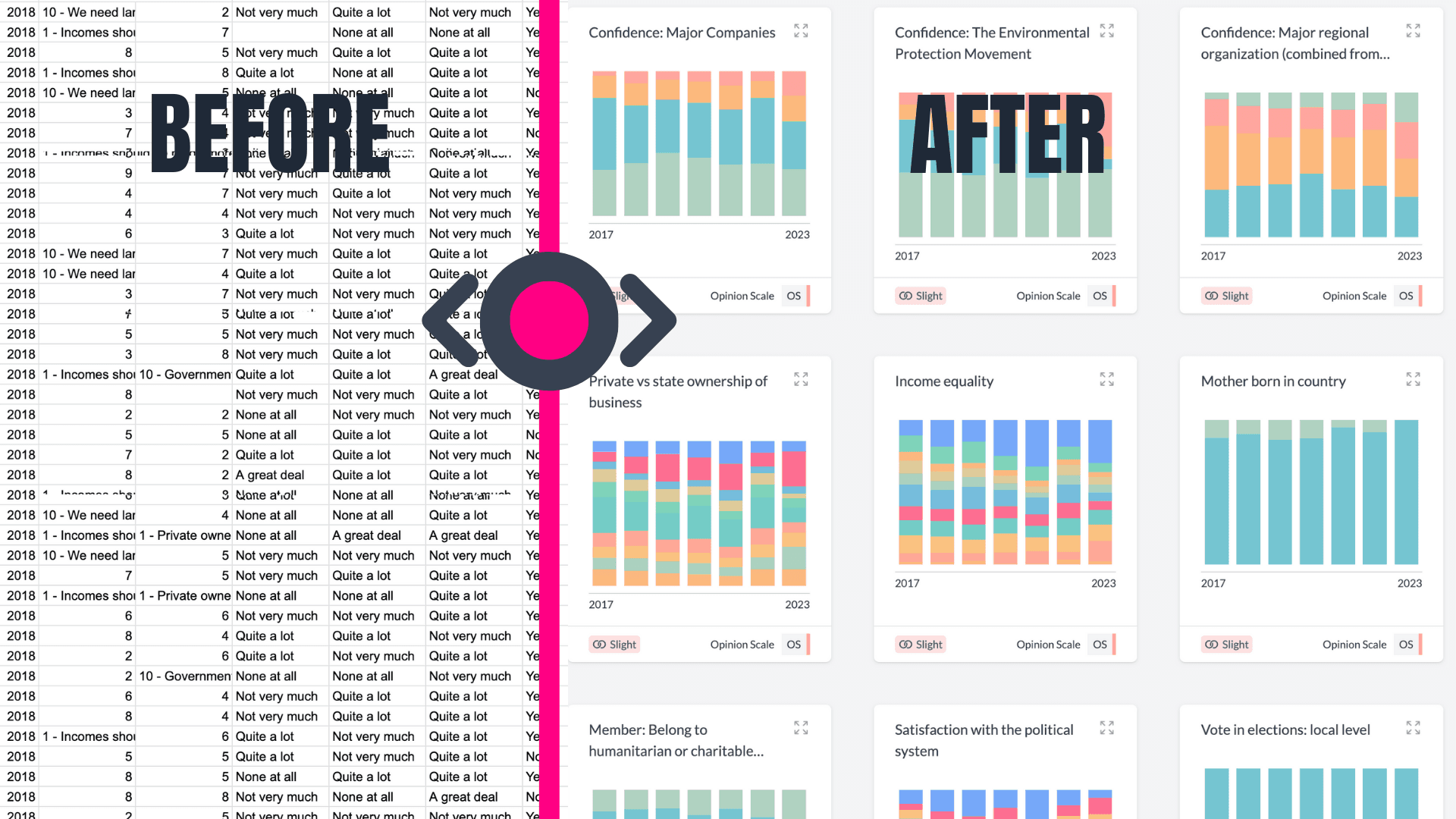
Interactive pivots for rapid data exploration.
3
Scaling open-text coding across 40,000 responses
The second challenge was scale. Dan worked with around 40,000 survey responses across three years, including multiple open-ended questions that were too large to code manually in a cost-effective way.
AddMaple made it practical to extract structured insight from text at that volume, without forcing the project into a choice between manual coding depth and delivery speed.
I had a dataset of around 40,000 survey responses over three years. Several questions were open-ended, too many really to code manually in any cost-effective way.
4
AI coding with confidence, not blind trust
The value was not just automation, but explainability through iteration. AddMaple made it possible to review, refine, and understand how the coding was working, increasing trust in the outputs and reducing concern about hallucinated results.
That made the workflow both faster and more credible for real research delivery.
The going back and forth, understanding how the coding was working gave me real confidence in the AI and that it was not hallucinating in what it was producing.
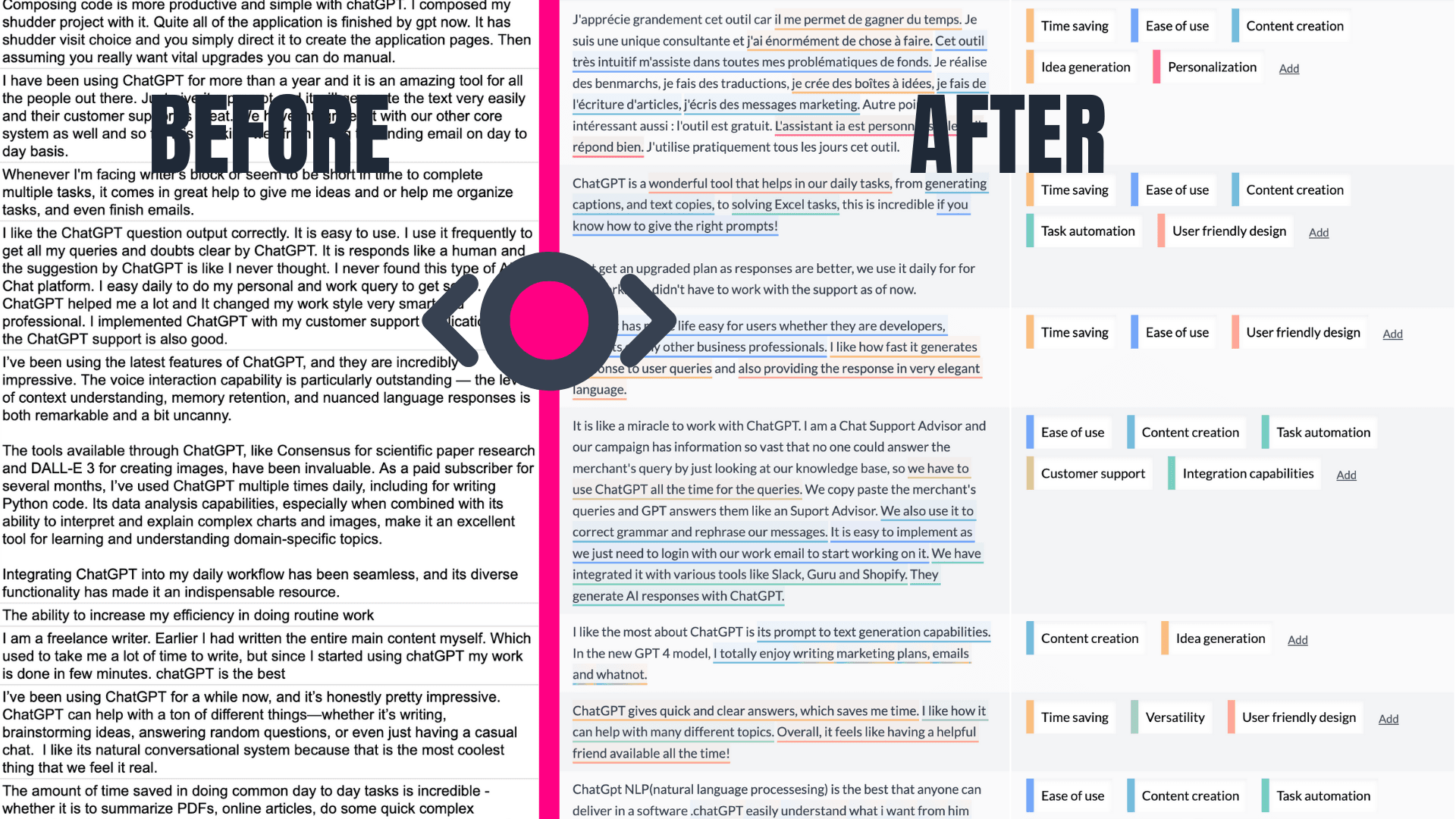
AI-assisted coding across large open-ended response sets.
5
Why this felt different from alternatives
AddMaple also gives Shed Research a practical commercial advantage: a subscription model that does not constrain use with tight credits or input limits.
For research teams running variable project loads, predictable access matters because analysis intensity can spike without warning.
It is different from others in the market. You buy a subscription, you use it as much as you want.
6
Outcome: faster delivery and deeper analysis
For Shed Research, AddMaple supports two sides of mixed-method consulting: rapid charting when speed matters, plus scalable text coding when depth matters.
The result is a shorter path from raw data to decision-ready insight, with enough transparency for the researcher to stay confident in the analytical quality.
I think AddMaple is a really brilliant tool. I am a big fan of it.