
How to create custom bins
AddMaple automatically calculates appropriate "bins" or groups for numeric and date data. These are re-calculated automatically based on your dataset and the filters you have applied.
Sometimes it's useful to have your own specific bins that don't change. There are two ways to create custom bins:
Method 1: Column Settings (Recommended)
For numeric and date columns, you can configure binning directly in the column settings. This is the easiest way to customize how your data is grouped.
- Click on the column header of a numeric or date column
- Select "Column Settings" from the dropdown menu
- Scroll to the "Binning" section
For Numeric Columns
You'll see several binning options:
- Auto: Uses optimal binning with Freedman-Diaconis rule
- Equal Frequency: Each bin contains similar numbers of data points
- Fixed Width: Bins have consistent width you define
- Custom: Define your own bin boundaries manually
The interface shows a live histogram preview so you can see how your data will be grouped before applying changes.
For Date Columns
You'll see these binning options:
- Auto: Automatically creates optimal time-based bins
- Calendar Periods: Groups by natural boundaries (year, quarter, month, week, day, hour)
- Fixed Intervals: Creates bins of fixed duration (e.g., every 7 days)
- Custom Breakpoints: Define your own date/time boundaries
Method 2: Custom Variable
For more complex binning needs or when you want to combine multiple columns, use a custom variable.
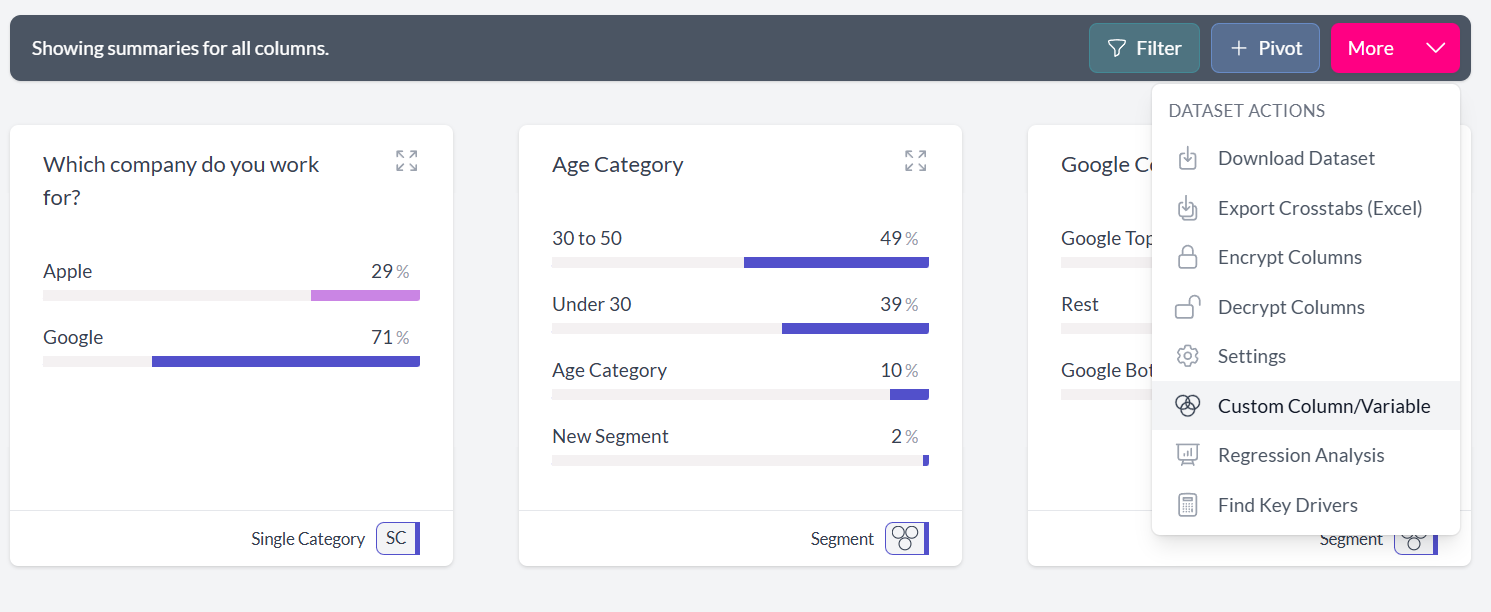
- Open the custom variable builder — Click More and select Custom Column/Variable.
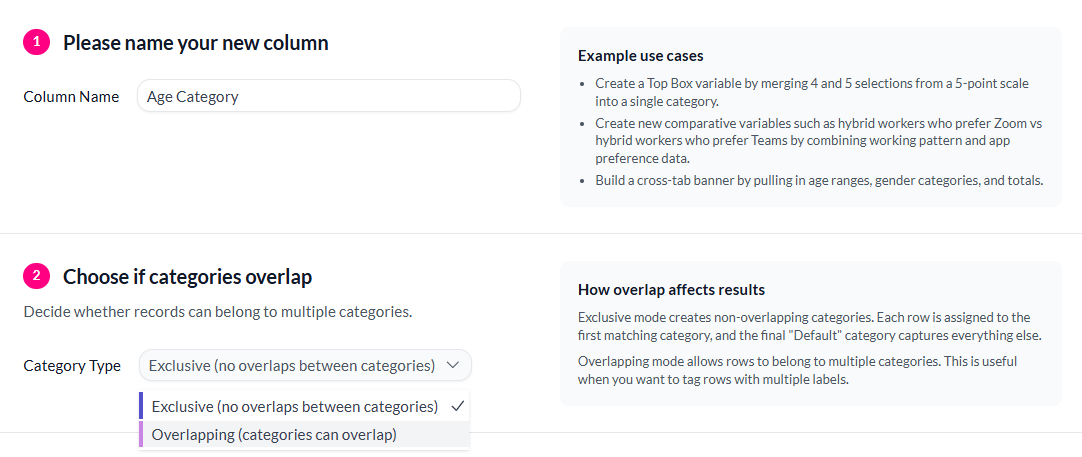
Name your column and choose a category type — Give your new column a name. In this example we are creating an Age Category column. Then choose whether categories overlap:
- Exclusive (no overlaps between categories) — Each row is assigned to the first matching category only. This is the most common choice and works like a single-choice column.
- Overlapping (categories can overlap) — A row can match more than one category. This is useful when categories are not completely distinct and works like a multi-select column.
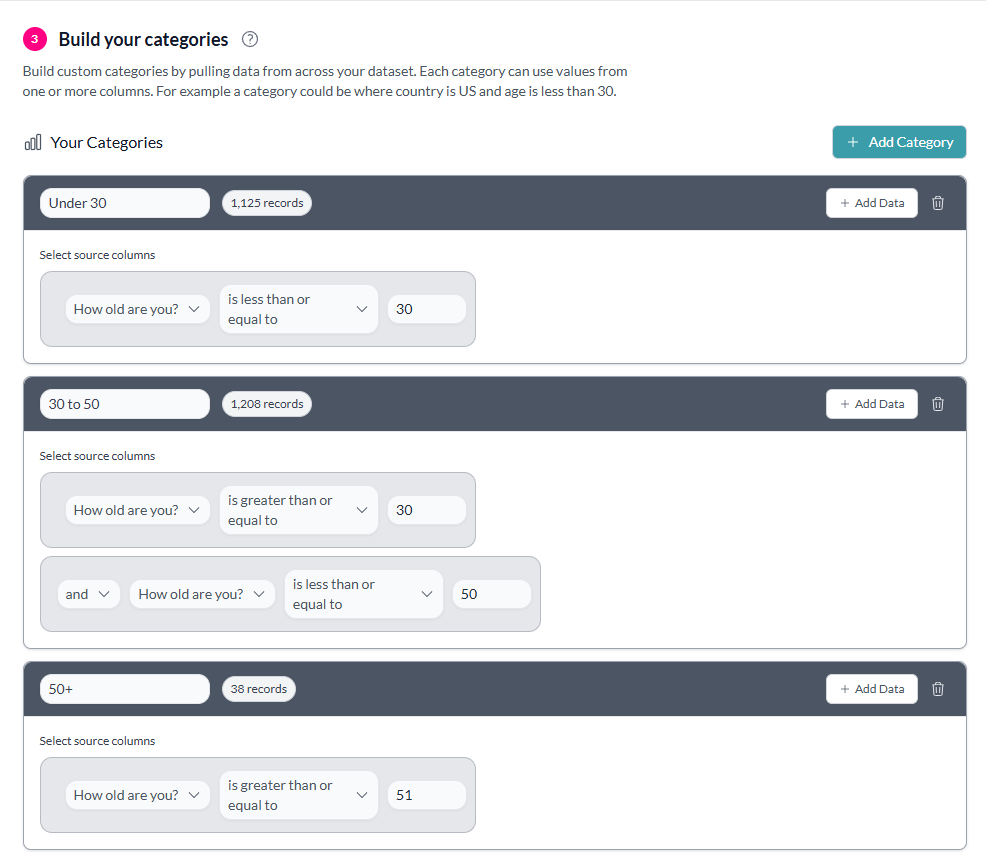
- Build your categories — Create your bins using data rules. In this example we've created three age categories: Under 30, 30 to 50, and 50+. As you add rules, AddMaple recalculates how many records match each category in real time.
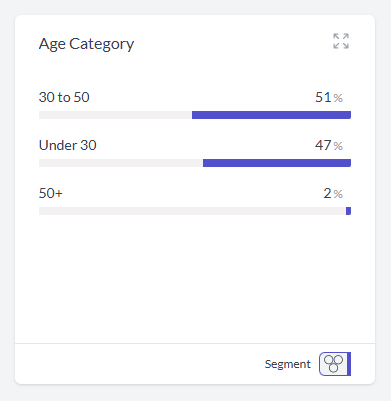
- Create the column — When you have finished, click Create Column. Your new custom variable appears on the Chart Dashboard. You can now explore, pivot, and filter by this column.
When to Use Each Method
Use Column Settings when:
- You want to modify how an existing numeric or date column is binned
- You need simple, straightforward binning configurations
- You want to see live previews of your binning changes
Use a custom variable when:
- You need to combine multiple columns for complex binning logic
- You want to create overlapping categories
- You need more control over category names and organization
- You want to create bins based on conditional logic across multiple fields
For more on custom variables, see How to create custom columns/variables.