


Ranked Impact Analysis
Find what matters before you know to ask.
Most research analysis begins with a list of questions someone has decided to investigate.
Ranked Impact Analysis starts differently.
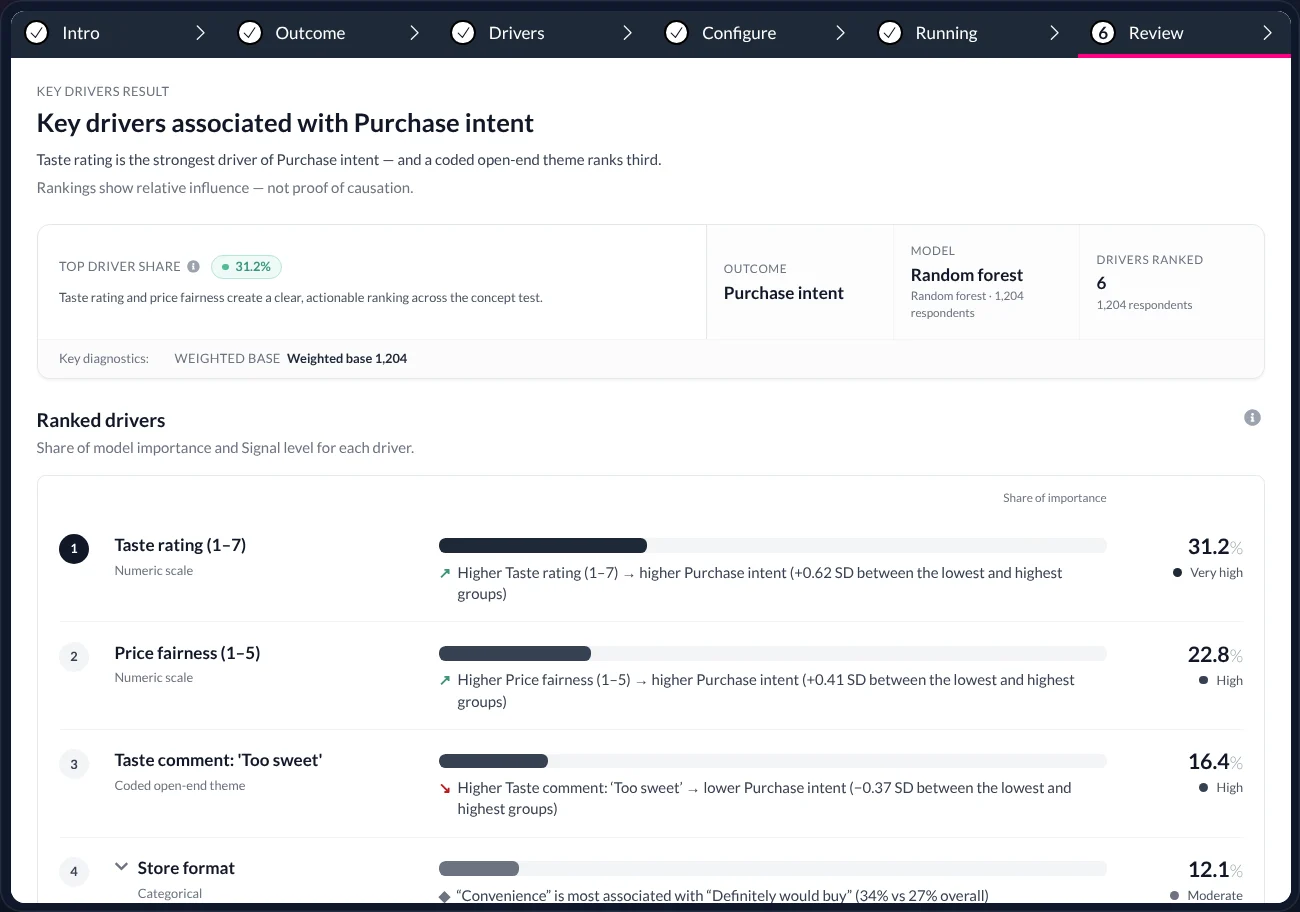
AddMaple systematically explores the study to uncover the strongest differences, relationships, drivers, interactions and patterns across the data, then ranks the findings so the most important evidence rises to the top.
It means your analysis is not limited to the tables somebody requested or the relationships somebody thought to test.
No insight goes undetected. The strongest rise first.
What you get
- 01A systematic scan across the study
- 02A ranked list of the most important findings
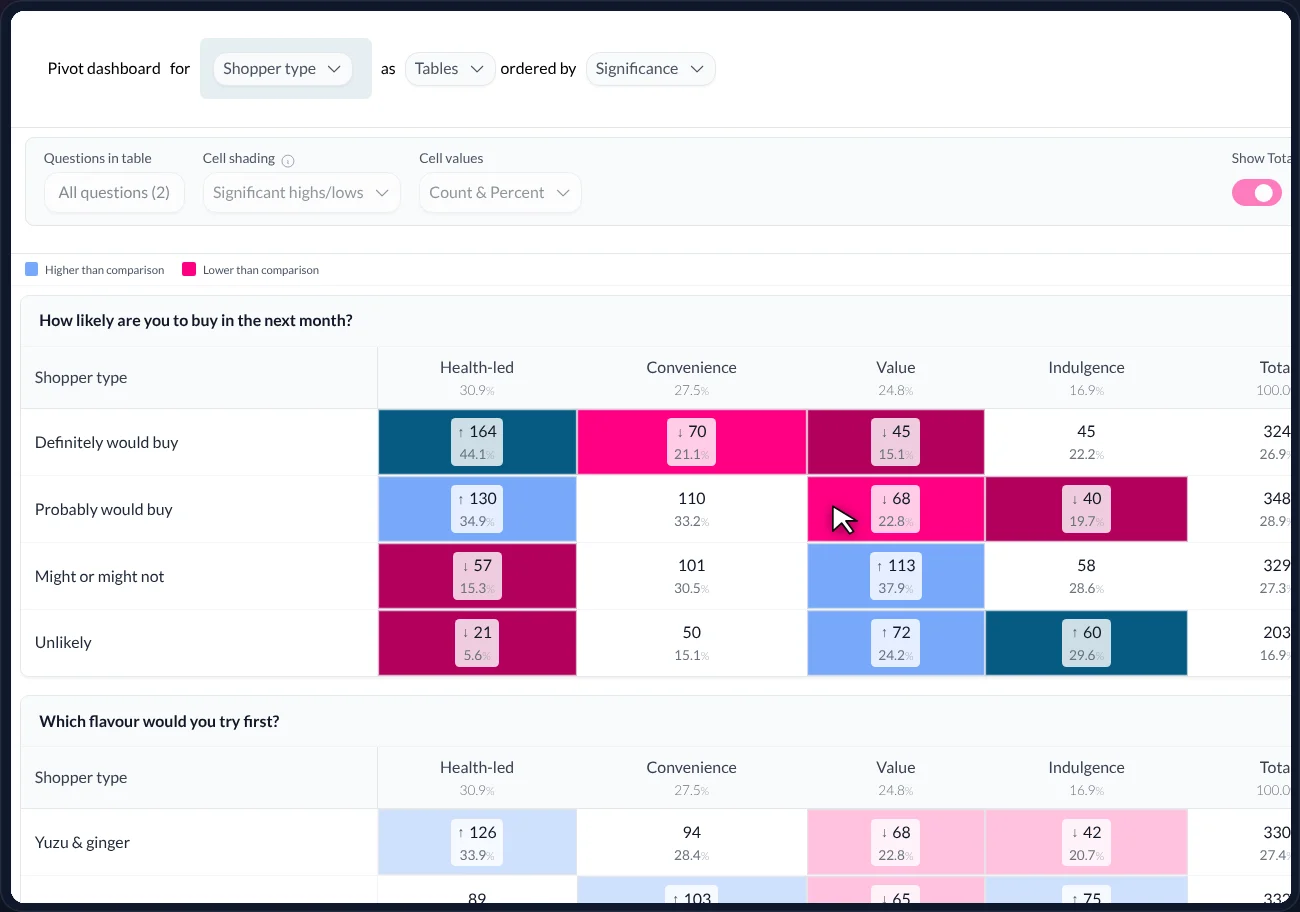
- 03Ranked differences between audiences, segments, markets or behaviours
- 04Relationships with important outcomes such as consideration, satisfaction, recommendation or renewal
- 05Driver analysis where appropriate
- 06Cross-variable relationships and unexpected patterns
- 07Interactions that may only become visible when variables are considered together
- 08Qualitative evidence connected back to quantitative findings where available
- 09The strength, magnitude, reach and confidence behind each finding
- 10A complete evidence register showing what was found and why it matters
- 11Priority areas for deeper investigation or validation
What makes RIA different?
Traditional analysis is often organised around the questionnaire.
Question 1. Question 2. Question 3.
RIA is organised around the evidence.
What is strongest? What is different? What connects? What deserves attention first?
A finding buried deep in the questionnaire can outrank something everyone expected to be important.
A result that looks interesting in a single table may fall down the ranking once its size, reach or consistency is considered.
How findings are ranked
RIA looks beyond statistical significance alone. Findings are considered in the context of:
- Strength of the evidence
- Magnitude of the difference or relationship
- Relevance to the research or business question
- How much of the audience it affects
- Consistency across the data
- Whether the finding adds genuinely useful information
The result is not a list of significant cells. It is a ranked view of what deserves attention.
Best for
Complex studies, large datasets, trackers, segmentation research, brand studies, customer research and any project where you want confidence that the important findings have not been missed.
It is particularly valuable when the dataset contains more than a traditional report can reasonably explore, when you want unexpected relationships, several possible outcomes, or an answer to “what else is in the data?”
The result
You move from deciding where to look to letting the evidence show you where to look first.
Rank what matters. Commission a Ranked Impact Analysis.
Give us the research question and the data. You do not need to decide which tables to request.
Book a demoThe other reports
What did the study find?
Topline Report
A clear first read: headline results, the audience differences that matter, and the evidence behind each finding.
Read this report →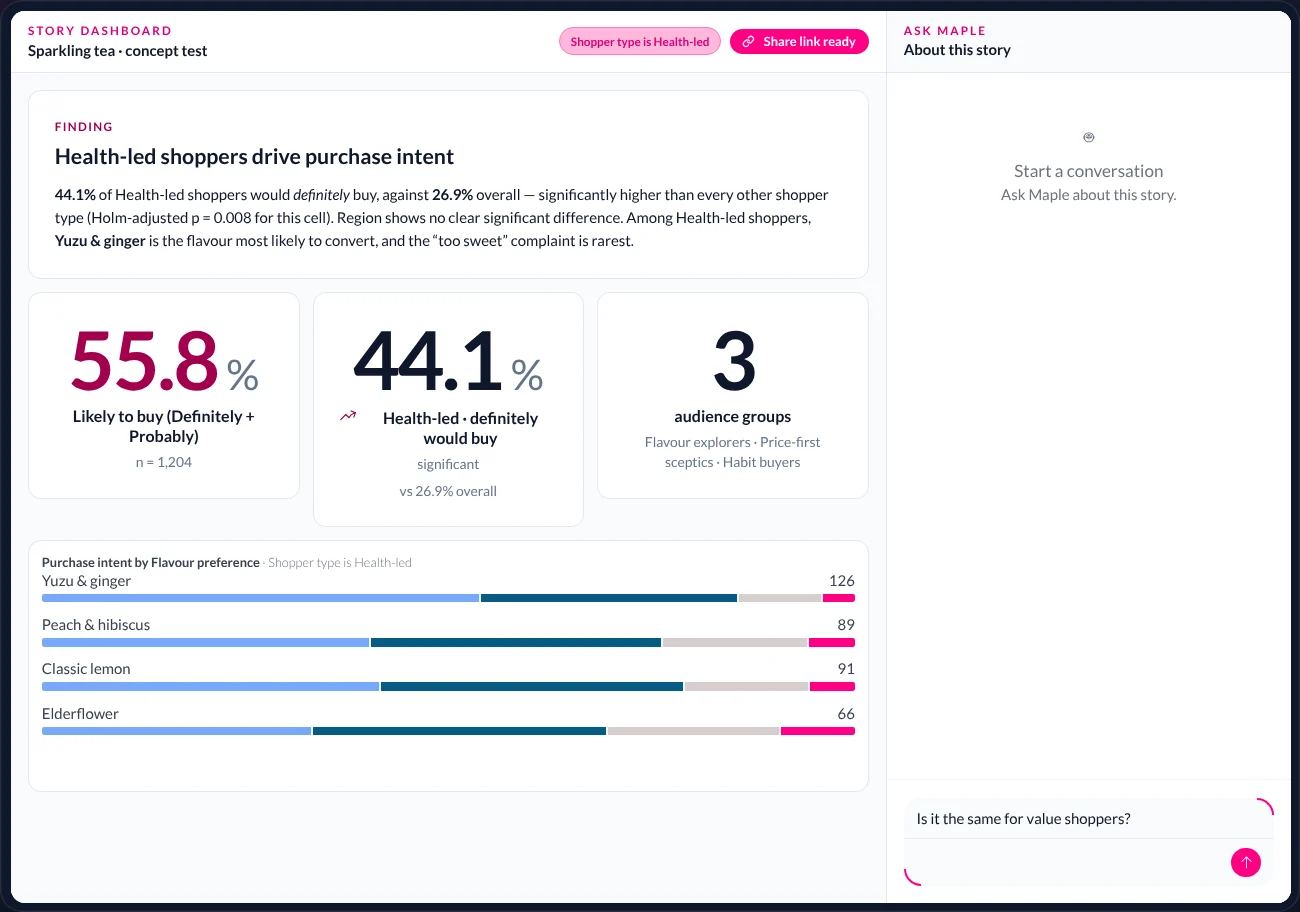
What does it mean, and what should we do?
Strategic Report
The evidence pulled into themes, tensions and implications — written for a decision, not a questionnaire.
Read this report →